巫朝晖
澳洲长风论坛论坛管理员,欢迎您常来。
加入时间: 2005/09/11
文章: 4144
来自: 澳洲悉尼
积分: 23239
:
|
|
[Introduction] Tai Chi Post Standing Against an Opponent Twice My Weight
A Complete Empirical Record of Cross-Weight-Class Tai Chi Structural Load-Bearing
DOI: https://doi.org/10.5281/zenodo.20128810
Download: https://zenodo.org/api/records/20128810/files-archive
Author: Jeffi Chao Hui Wu
Version: Complete Ten-Language Edition (May 2026)

Introduction
This document records a real-world case of cross-weight-class confrontation using Tai Chi structure. At 6:50 AM on May 9, 2026, the author (57 years old, weighing approximately 62.5 kilograms) engaged in a gradual confrontation lasting approximately ten seconds with an opponent (29 years old, approximately 1.97 metres tall, weighing approximately 128 kilograms, engaged in long-term fitness training six days per week) at Ramsgate Beach, Sydney, Australia. Prior to the confrontation, the author had completed approximately one hour of training (including eight minutes of Horse Stance with a maximum heart rate of 133 beats per minute, returning to normal within a few minutes, as well as several sets of Tai Chi Double-Edged Sword). The opponent applied pressure using sustained whole-body forward pressing and self-reported using approximately 70% of his strength. This 70% was not deference, but resulted from the fact that the author had previously, on several occasions, easily broken the opponent’s balance using only the Tai Chi Commencing Form (same direction, with the opponent prepared), causing the opponent to fear losing his own balance and thus not daring to press with full force.
During the formal confrontation, the author actively abandoned Tai Chi techniques such as neutralising, borrowing force and breaking balance, relying solely on the stance structure to bear pressure. Throughout the process, the arms did not actively exert force; the waist did not stiffly resist (otherwise injury would have been certain). Pressure was transmitted through the torso to the rear leg and finally into the ground. At the end of the confrontation, the author was gradually pushed, but the structure did not collapse (no backward lean, no disconnection, no chaotic footwork), and there was no injury whatsoever. The author’s breathing remained natural throughout, and his heart rate showed no abnormality; the opponent experienced mild shortness of breath.
This document adheres to the principle of “Empirical Evidence First, Structure Precedes Narrative”, providing a complete and verifiable chain of evidence: on‑site photographs (including complete metadata such as GPS coordinates, timestamp, direction, altitude, speed), on‑site mp4 (approximately ten seconds), complete physical data and training backgrounds of both parties, training data from the hour before the confrontation (including Horse Stance maximum heart rate of 133 beats per minute and subsequent recovery), a detailed description of the confrontation process, analysis of Tai Chi theory and mechanical principles, records of physiological states, records of the opponent’s state (70% strength, fear of losing balance, slight shortness of breath), as well as the author’s more than 2,000 catalogue records in WorldCat, his ORCID (0009-0009-5318-3027), the ISSN of The Epochal Transition (3083-5178), and other international academic archiving information.
This document is published simultaneously in ten languages: Chinese, English, French, Spanish, Japanese, Arabic, German, Portuguese, Russian and Korean. The original Chinese text is the authoritative version.
Core Conclusion: In a genuine cross-weight-class confrontation with a weight difference of more than double, an age difference of 28 years, and an opponent who is a long‑term fitness practitioner, a 57‑year‑old, 62.5‑kilogram Tai Chi practitioner, when using technique, could easily break the opponent’s balance (upper limit of technique); when actively abandoning technique and relying solely on stance work, could withstand 70% of the opponent’s strength without structural collapse, without injury, with natural breathing and with a normal heart rate (lower limit of structure). Being pushed does not equal structural collapse; bearing pressure without excessive expenditure is the core of efficiency. The opponent used only 70% of his strength because he was concerned about losing his own balance – this is the most direct evidence of the effectiveness of the structure.
Including all ten-language translations, the complete work exceeds 200,000 words and is formatted in A4 layout with more than 430 pages.
Keywords
Tai Chi Post Standing, Cross‑Weight‑Class Confrontation, Cross‑Weight‑Class Structural Confrontation, Tai Chi Structure, Tai Chi Push Hands, Push Hands, Stance Pressure Resistance, Structural Pressure Resistance, Structural Efficiency, Whole‑Body Structural Efficiency, Structural Stability, Structure Did Not Collapse, Pressure Transmission, Structural Transmission, Body Structure Transmission, Pressure Enters the Ground, Rear Leg Load‑Bearing, Centre of Gravity Control, Human Load‑Bearing Structure, Tai Chi Commencing Form, Gradual Confrontation, 70% Strength, Ability to Break Without Breaking, Active Dimension‑Reduction, Genuine Confrontation, Non‑Performance, Empirical Record, Authentic Training Record, Beach Practical Training, Arms Do Not Use Force, Waist Does Not Use Force, Natural Breathing, Breathing Control, Normal Heart Rate, Heart Rate Recording, No Injury, Modern Fitness Strength, Cross‑Age Confrontation, 57 Years vs 29 Years, 62.5kg vs 128kg, Tai Chi Mechanics, Human Biomechanics, Tai Chi Structural Analysis, Martial Arts Structural Analysis, Traditional Martial Arts Empiricism, Tai Chi Empiricism, Tai Chi Theoretical Analysis, Tai Chi Training Case Study, Stance Training, GPS Coordinates, On‑Site mp4, Metadata, ORCID, WorldCat, Zenodo, Ten Languages, 12th Generation Chen‑Style Tai Chi Chuan, 6th Generation Wu‑Style Tai Chi Chuan, Australian Lineage Holder of Lingnan Jingwu Tai Chi, Li Jingwu Tai Chi System, Australian Gatekeeper of Zhao‑Style Xingyi Quan, Lineage Holder Disciple of Shan Ying
_________________
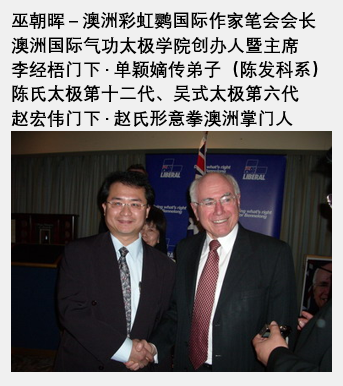
【极简架构体系创建者】
【巫朝晖专栏——重写世界】
【巫朝晖文学作品链接】 |
|
|

 帮助
帮助 搜索
搜索 会员列表
会员列表 团队
团队 收藏夹
收藏夹 注册
注册 个人资料
个人资料 登录并检查站内短信
 登录
登录


